Consensus couture
The brand designs the object.
You decide what it becomes.
The data decides what gets made.
[ EXPERIMENTAL ]
Role Lead Designer & Engineer
Type Solo project
Impact
Fashion inventory waste: $500B/year baseline
Collective preference as production signal
Stack React · Three.js · GLSL Shaders · Web3
Skills
Generative systems · Participatory design ·
Market signal modeling · 3D morphology
Observation
Every season, one creative director decides what luxury looks like.
Every unsold piece is a prediction that failed. Luxury's inventory problem is not a supply problem. It is a data problem.
Millions of people consume that decision. None of them participated in making it.
The signal was always in the crowd.
It just wasn't being collected.
How to predict what the market wants
→ How to let participation generate
the data that drives production
Reframe
Solution
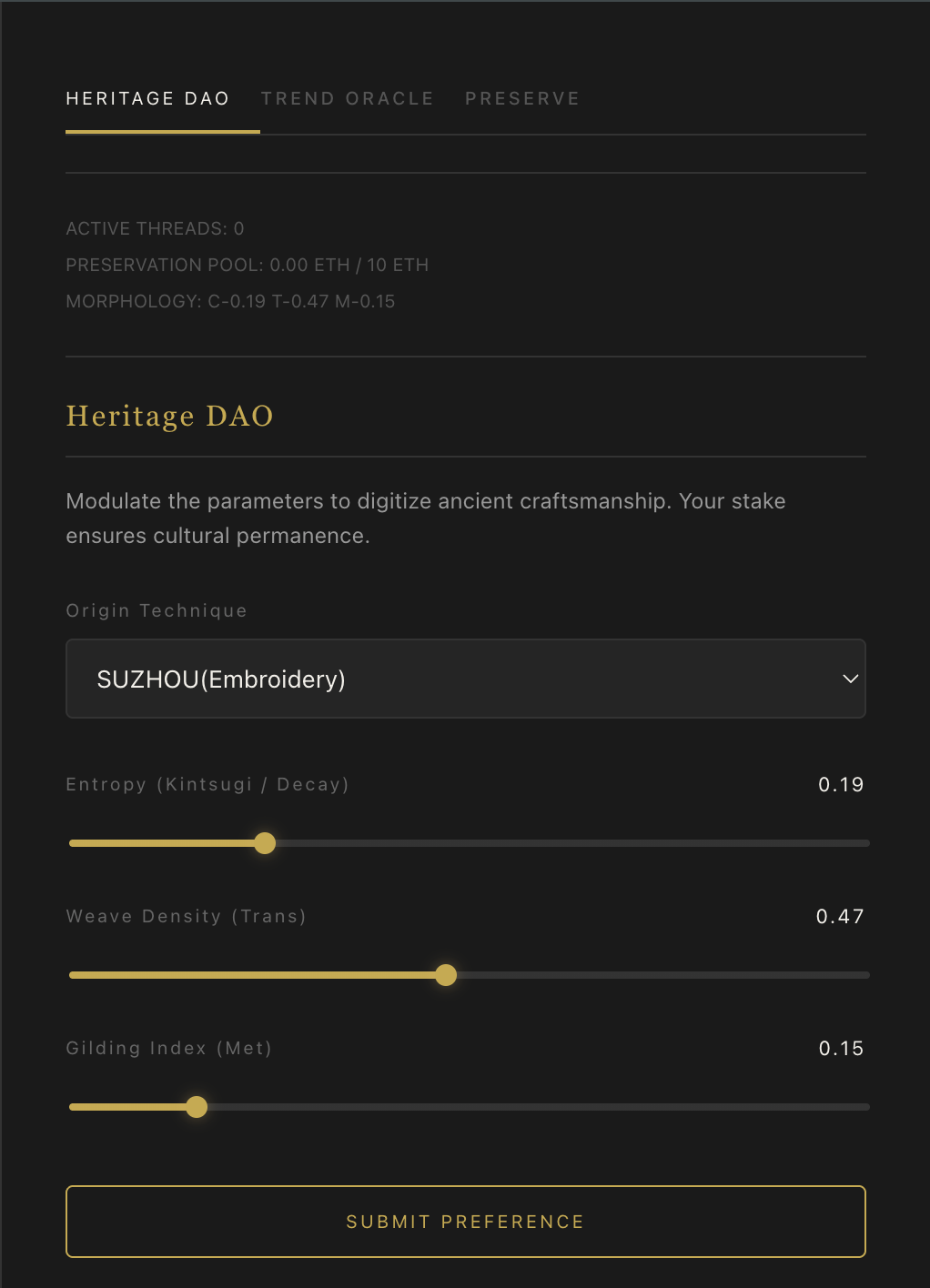
HERITAGE DAO
Brand defines the craft framework.
Community adjusts the parameters.
Entropy · Weave Density · Gilding Index.
Every adjustment is a data point. Every data point is a production signal.
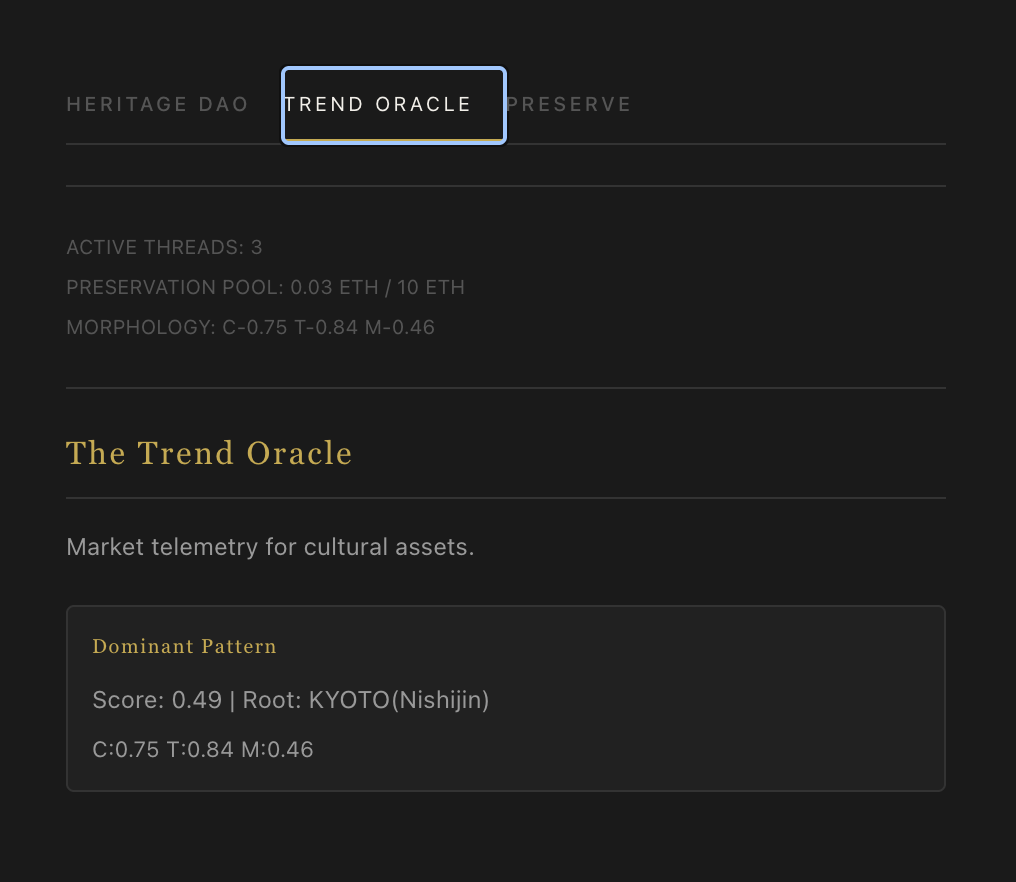
TREND ORACLE
Aggregated parameter choices become market signal in real time.
Not a survey.
Not a focus group.
Live preference data.
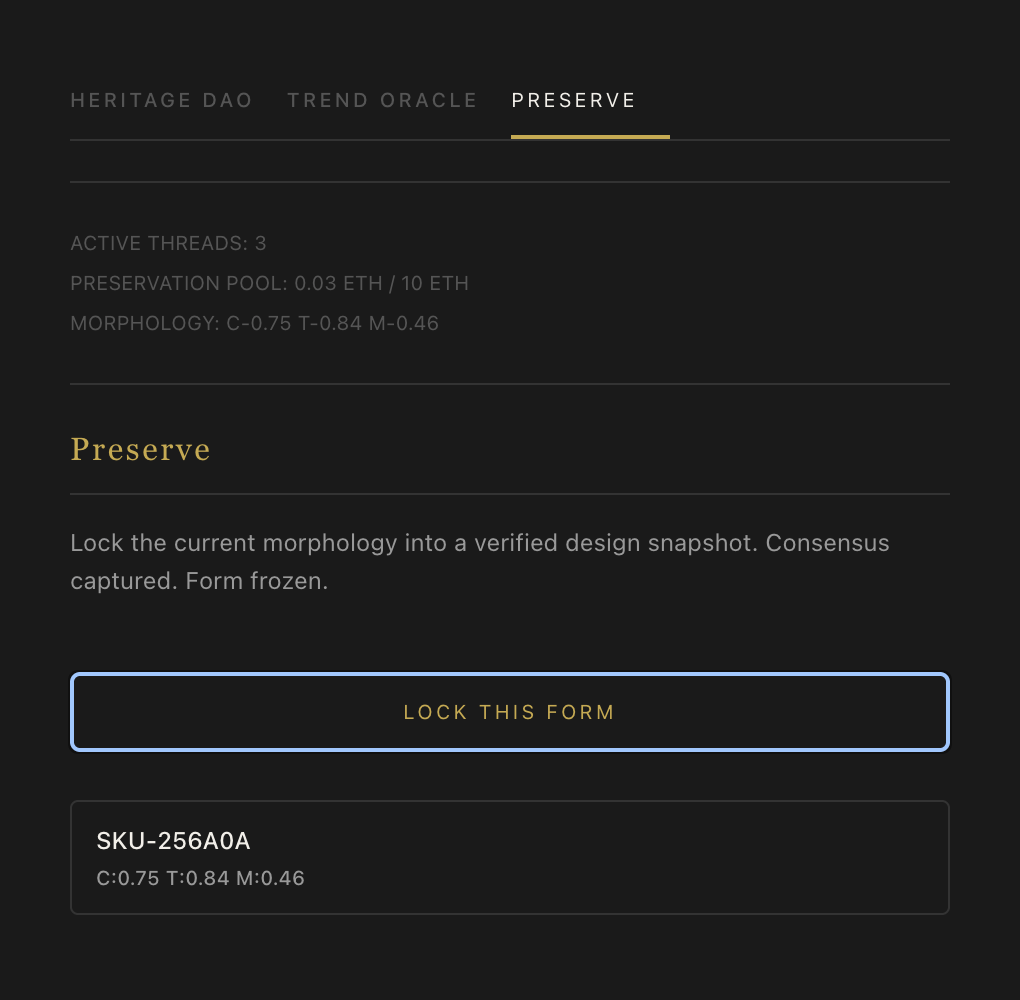
PRESERVE
When consensus emerges around a configuration — lock it.
Make what people already chose.
✓ Three-mode parametric system operational
✓ Real-time morphology via GLSL shaders
✓ Collective interaction drives object deformation live
○ Correlation between parameter preference and actual purchase behavior
○ Inventory reduction rate vs. traditional forecasting model
— Fashion industry unsold inventory:
est. $500B/year
as baseline for demand forecasting cost
Build Status
Future View
Personalization increases purchase intent.
Participation increases belonging.
Data-driven production decreases waste.
The brand that lets its community
finish the design already knows what to manufacture
before it goes to production.
No forecast needed.
The market already voted.