Protocol Lethe
A Decentralized Emotional Metabolism System
This project demonstrates my ability to combine philosophical frameworks, advanced graphics programming, and interactive system design into a coherent, real-time web experience.
From Transaction to Transcendence.
1. Project Overview
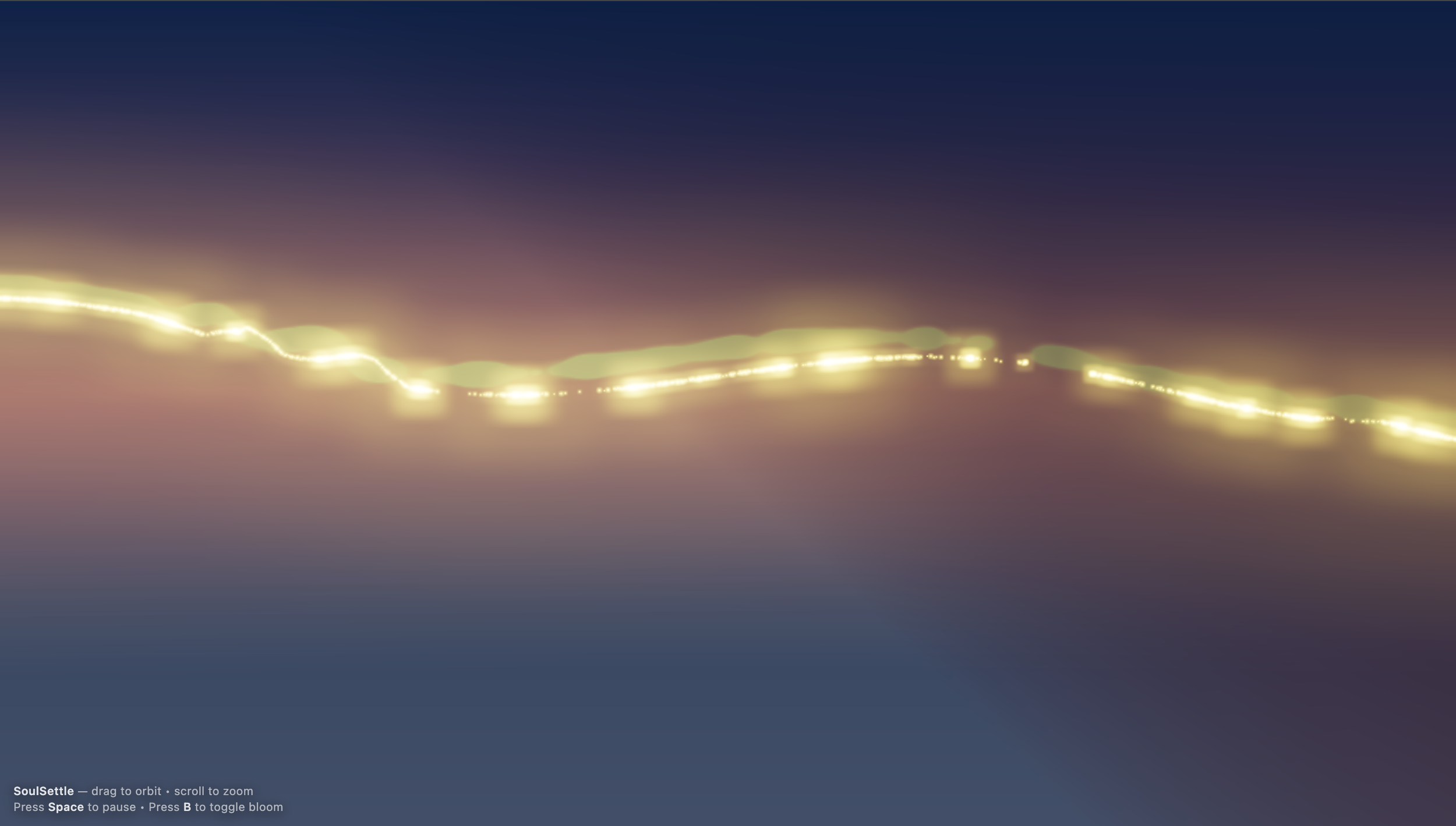
Protocol Lethe is a web-based interactive ritual that visualizes emotions as energy flows.
Inspired by Taoist philosophy, the project treats emotional stagnation as “stagnant Qi” and transforms it into a real-time, shader-driven fluid system.
Users interact with water and fire as symbolic protocols to either release or sever emotional states—turning an internal psychological process into a tangible digital ritual.
2. Rationale
Modern digital interactions are transactional, but human emotions are accumulative.
Unprocessed emotions behave like trapped energy—eventually becoming toxic.
This project asks:
What if emotional release could be treated as a system, not a confession?
What if the browser itself became a ritual space?
By framing emotion as data with flow, resistance, and entropy, Protocol Lethe explores how code can mediate psychological states without language.
3. Concept & Worldbuilding
Emotional Metabolism Model
Emotions are treated as energy units moving through a system:
When flowing → cleansing
When blocked → pressure
When severed → irreversible transformation
🌊 Water — Release
Purpose: Let heavy emotions flow out
Interaction: Meditative cursor movement
Metaphor: “Proof of Breath”
Visual Logic: Smooth, continuous fluid dynamics
Two Ritual Protocols
🔥 Fire — Severance
Purpose: Cut off toxic attachments
Interaction: Sharp, decisive gestures
Metaphor: “Digital Cremation”
Visual Logic: Volatile distortion, burning displacement
4. Interaction Design
Users interact directly with a reactive liquid surface
Cursor movement acts as:
Force input
Emotional intention
The surface responds with:
Flow
Turbulence
Dissolution
There is no textual instruction—the system is learned through bodily interaction.
5. Technical Implementation

Graphics & Simulation
Custom GLSL shaders
Fluid-like motion via:
Noise fields
Velocity-based distortion
Light refraction effects
Frontend & 3D Stack
React Three Fiber (R3F)
Three.js
Integrated in a Next.js environment
Performance Considerations
Optimized GPU draw calls
Frame-stable shader loops
Real-time interaction at browser scale

6. Skills Leveraged
Graphics Programming
Advanced GLSL
Procedural noise
Shader-based interaction logic
WebGL / 3D Web
React Three Fiber
Three.js scene orchestration
Creative Systems Thinking
Emotion → Data → Visual State mapping
Performance Optimization
Real-time rendering constraints in browser
7. Philosophy
Taoist Influence
“The highest good is like water.”
(上善若水)
Water adapts to form
Emotion adapts to interface
Code becomes the vessel
Technological View
The browser canvas is not a screen
It is a dynamic ritual interface
Interaction replaces narration
8. Outcome & Reflection
Successfully translated intangible anxiety into a tangible, interactive system
Demonstrated how shaders can encode psychological metaphors
Positioned creative coding as a form of digital ritual design, not just visualization