Material
Simulator
2026
Design engineer
Problem
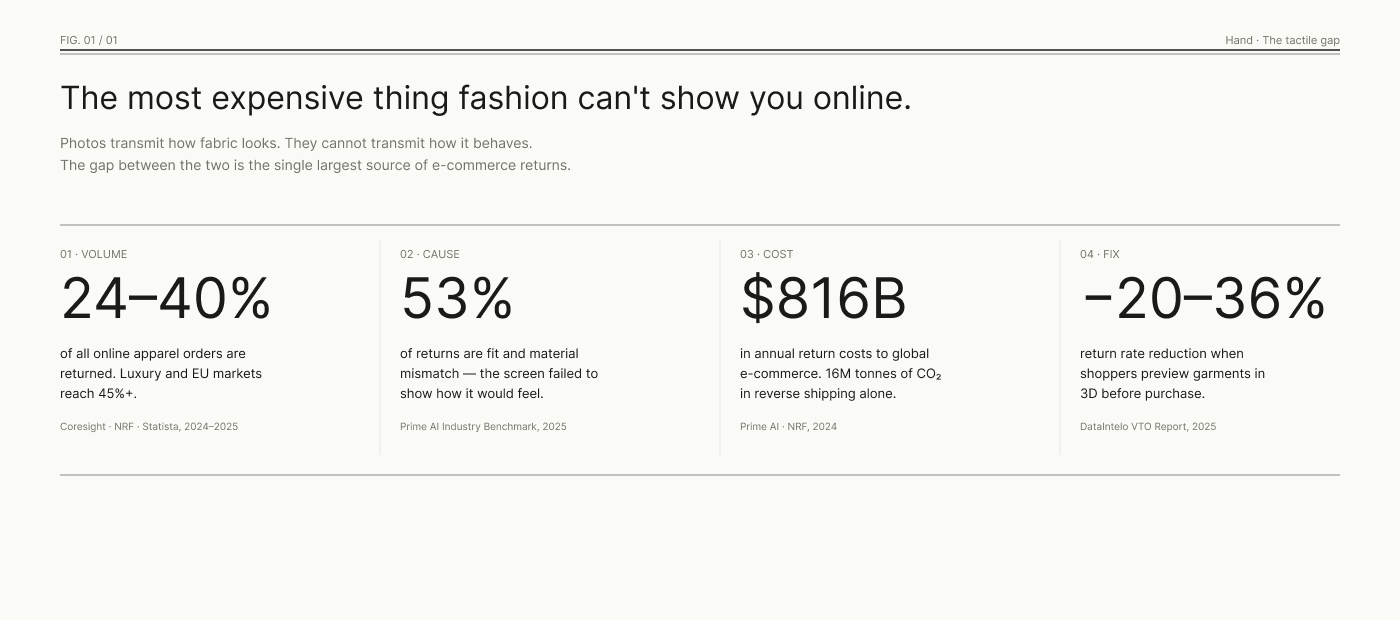
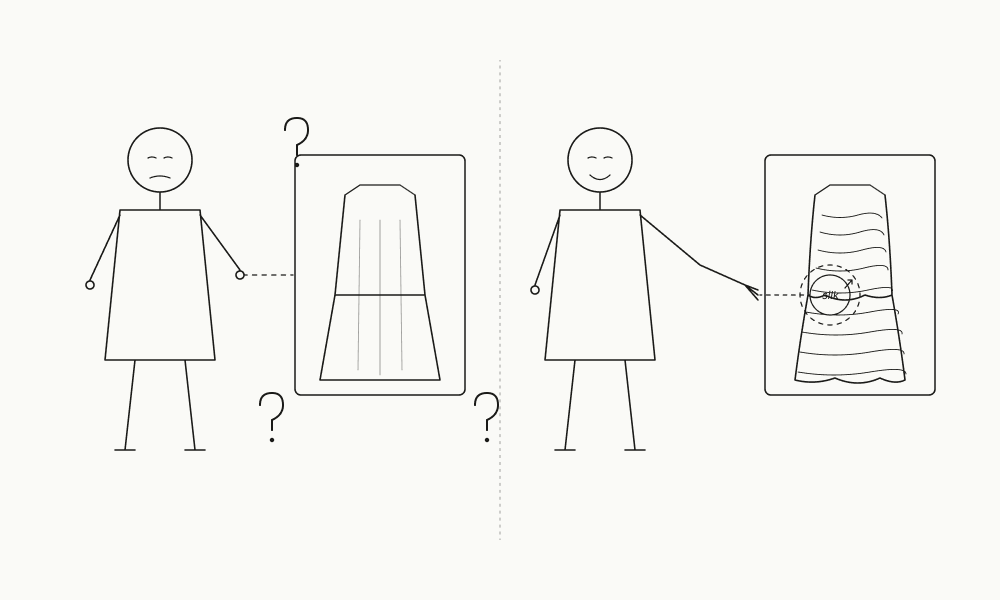
Luxury e-commerce has high return rate since it only shows you what fabric looks like, never what it feels like.
Solution
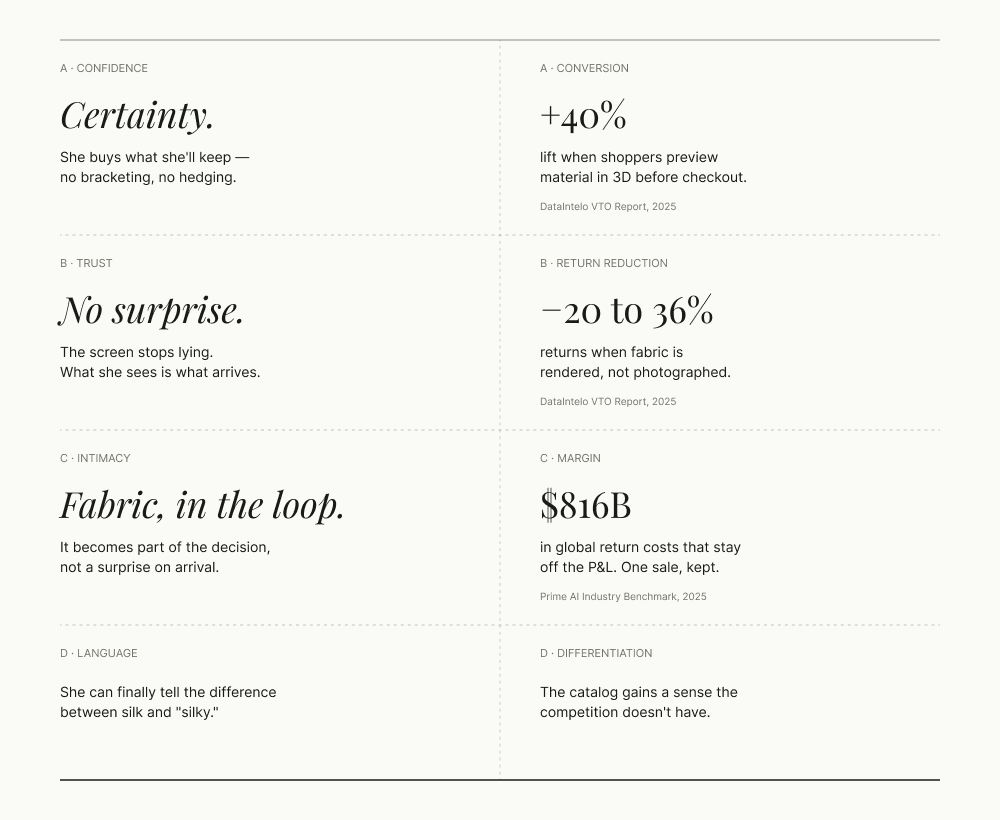
is a WebGL engine that simulates fabric behavior in real time — drape, weight, sheen, friction, so a buyer can feel a garment before they buy it. By closing the tactile gap, 3D material previews have been shown to cut return rates by 20–36% and lift conversion by up to 40%.
Stack
Three.js + GLSL shaders
Verlet cloth physics
WebGL
One engine, two readings.
For the consumer, Material Simulator ends the guessing.
For the brand, it ends the returning. Same code, two outcomes
— both measurable from day one.
Research
Industry Pain Point
Return rate is high since user could not feel the textile. Material Simulator solves this problem
User Profile
Maya
27 yrs old
Friday night. One dress, no idea how it'll feel.
She is the user behind every number on the previous page:
→ One of the 24–40% who returns.
→ One of the 53% citing fit and material mismatch.
→ One of the 70% of luxury spend that comes from her generation.
Material Simulator is not a feature for some shoppers. It is infrastructure for the dominant shopper of the next decade.